
In a recent LinkedIn post, sales strategist John Barrows explores the evolving role of sales representatives in an era increasingly dominated by artificial intelligence. Barrows candidly discusses his own experiments with AI tools and the profound impact they are having on how businesses operate and how buyers engage with potential solutions.
Barrows begins by recounting a provocative question he posed to prospects: “why did you want to talk with me instead of AI?” He admits this question, initially met with some resistance, stemmed from a personal realization about AI’s capabilities.
“I had just made the switch from ChatGPT to Claude CoWork and spent an entire weekend doing a deep dive on my business strategy, working through a laundry list of tasks and to-do’s that I had been putting off for years, building apps and workflows and much more.”
This personal experience, Barrows explains, led him to re-evaluate the necessity of traditional sales interactions. He highlights how AI tools can now perform tasks that previously required significant vendor engagement, even leading him to cancel contracts.
The AI Shift and the Sales Rep’s Dilemma
The core concern for Barrows is not just AI replacing sales tasks, but the potential for clients to realize they no longer *need* traditional sales engagement. He elaborates on how AI, like Claude, can assist in business strategy, research, and even vendor selection, potentially front-loading the discovery process to a point where a human sales rep’s intervention is less critical.
“If/when I do need to talk to a rep for whatever reason, if that rep doesn’t add value immediately or tries to bring me back through their sales process I’ll end the conversation faster than it started.”
Barrows argues that the bar for sales representatives is being raised significantly. If AI can answer prospect questions as effectively as a human rep, or even better, then that rep is likely in trouble. The ease with which AI can simulate a prospect’s journey through a sales process is a stark warning.
The Crucial Role of Trust and Validation
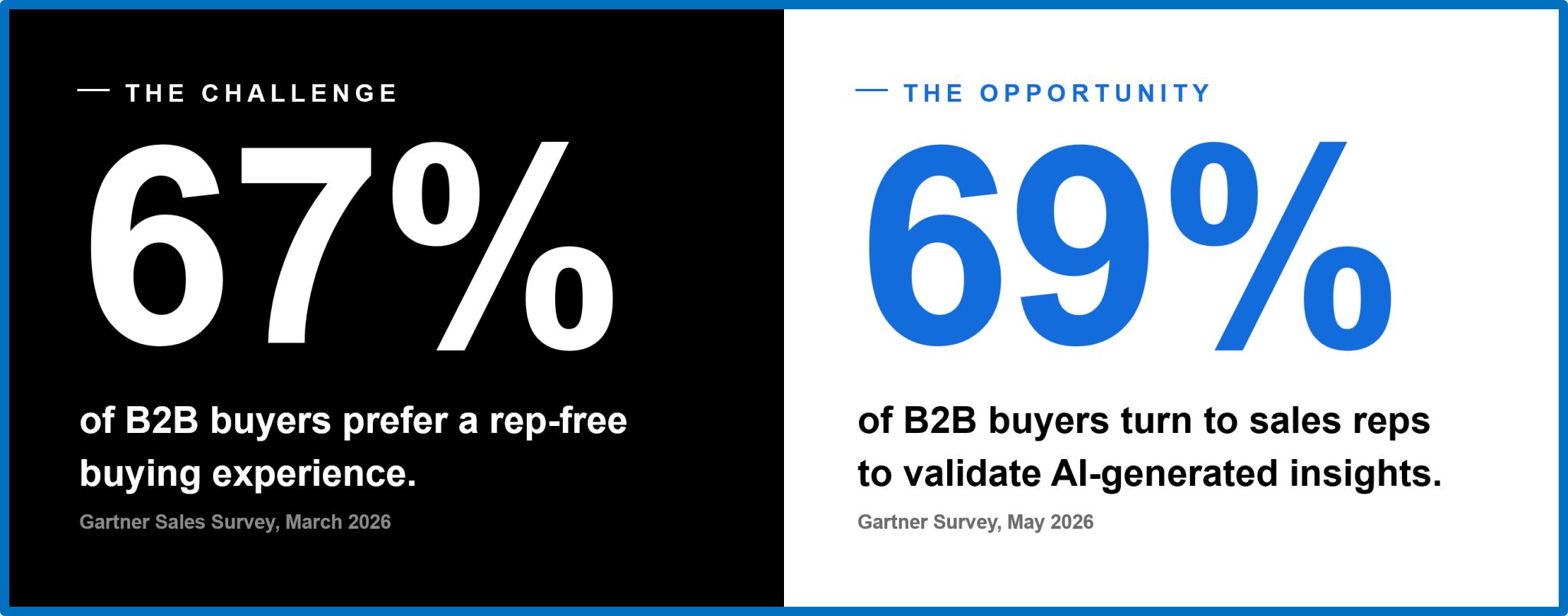
However, Barrows finds a glimmer of hope in recent data, specifically from Gartner. While the percentage of B2B buyers who prefer not to speak with a sales rep has risen, a significant portion still rely on human interaction for validation.
“The bad new first – the % of B2B buyers who don’t want to talk to a sales rep has increased from 43% to 67%. The good news – 69% of buyers turn to sales reps to validate AI-generated insights.”
This data, according to Barrows, underscores a persistent trust deficit in AI-generated information. Great sales reps, he contends, are essential for bridging this gap and providing the necessary validation that buyers seek. This presents an opportunity for skilled professionals to differentiate themselves.
Adapting the Sales Discovery Process
Barrows suggests a shift in how sales professionals approach initial conversations. Instead of the potentially confrontational question about preferring AI, he proposes a more collaborative and insightful approach.
“Maybe we shouldn’t phrase the question as ‘why did you want to talk with me instead of AI?’ but instead ask ‘what have you learned from AI so far and what additional questions do you have or information do you need to validate to help you make a decision?'”
This reframing, in Barrows’ view, acknowledges the buyer’s use of AI while positioning the sales rep as a valuable partner in validating information and facilitating decision-making. For sales reps who can identify errors, gaps, or lack of context in AI-generated insights, their value proposition becomes even stronger. Ultimately, Barrows’ post serves as a critical examination of AI’s impact on sales, emphasizing the enduring need for human expertise in building trust and validating complex information.
📝 About This Content
This article is based on insights shared by John Barrows on LinkedIn.
📅 Originally posted on July 6, 2026 | View original post on LinkedIn →