
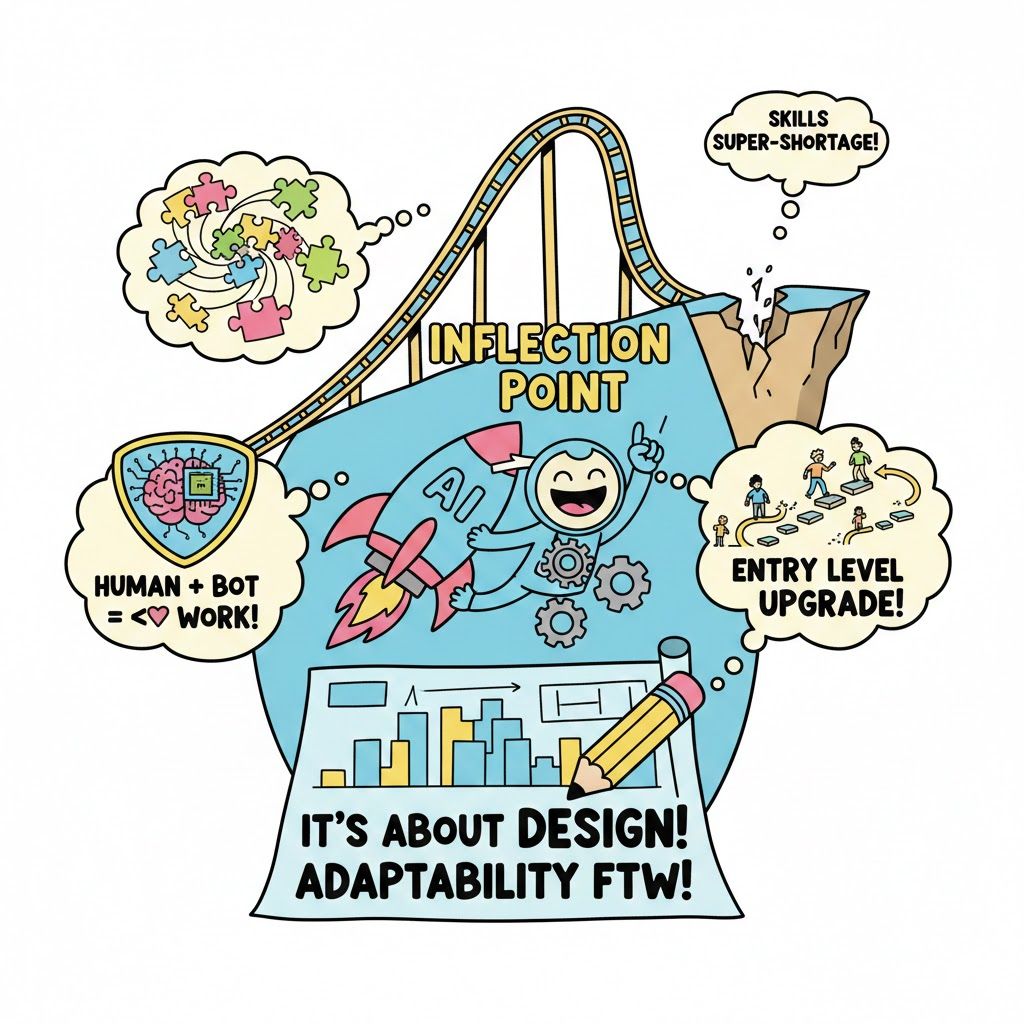
In a recent LinkedIn post, Jason Averbook argues that the concept of the ‘future of work’ is no longer a distant prospect but a present reality, characterized by fundamental structural shifts rather than gradual evolution. Averbook, a prominent voice in the HR and work trends space, highlights that the ongoing transformations are so profound that we have already passed a critical inflection point.
Citing a World Economic Forum report, Averbook emphasizes that the changes are not a slow transition but a complete rewiring of how work is structured and performed. He points out that the widely discussed “skills shortage” is not a temporary market fluctuation but an inherent, baked-in challenge.
“Skills are evolving faster than hiring, learning, and job architecture can keep up. This isn’t a recruiting problem. It’s a systems problem.”
This assertion reframes the persistent talent gap from a recruitment issue to a deeper, systemic challenge within organizations. As Averbook notes, traditional approaches to hiring and development are struggling to keep pace with the rapid obsolescence and emergence of necessary skills.
AI’s Role in Redefining Skilled Work
Averbook also addresses the impact of artificial intelligence, asserting that it is not primarily about job replacement but about the redefinition of what constitutes skilled work. He posits that the traditional dichotomy between technical and human-centric roles is dissolving.
According to Averbook, the future workforce will increasingly demand a blend of both technical proficiency and uniquely human capabilities. He warns that organizations maintaining outdated job families that do not account for this convergence are already behind the curve.
“The line between technical and human roles is collapsing. Most future roles will require both and if your job families still assume otherwise, they’re already outdated.”
This perspective suggests that a fundamental rethinking of job descriptions and organizational structures is necessary to align with the evolving nature of skilled labor.
Reimagining Entry-Level Pathways and Talent Pipelines
A significant portion of Averbook’s analysis focuses on the breakdown of traditional entry-level career pathways. He attributes this not to any deficiency in younger generations, such as Gen Z, but to organizational designs that are no longer relevant to the current work landscape.
Averbook cautions against the simple automation of junior tasks without a concurrent redesign of career progression. He argues that such an approach, without a holistic view of talent development, inevitably leads to stalled pipelines and a lack of future leaders.
“Automating junior tasks without redesigning progression is a recipe for stalled talent pipelines.”
This highlights the critical need for organizations to proactively design and invest in structured career paths that acknowledge the new realities of work and skill development.
The Primacy of Design Over Tools
Ultimately, Averbook concludes that the key to navigating these changes lies not in adopting new technologies, but in the fundamental design of work, learning, and career structures. He asserts that successful organizations will be those that prioritize adaptability in their design principles over rigid adherence to traditional titles or roles.
In Averbook’s view, the organizations poised to thrive will not merely ‘adopt AI’ but will fundamentally redesign their work, learning, and career frameworks to foster adaptability. This represents a shift from viewing these challenges as future-oriented problems to addressing them as immediate leadership imperatives.
As Averbook puts it, “This is no longer future-of-work thinking, it’s present-tense leadership.” His insights underscore the urgency for businesses to move beyond incremental adjustments and embrace a strategic redesign of their entire talent ecosystem to align with the structural shifts already underway.
📝 About This Content
This article is based on insights shared by Jason Averbook on LinkedIn.
📅 Originally posted on December 18, 2025 | View original post on LinkedIn →