
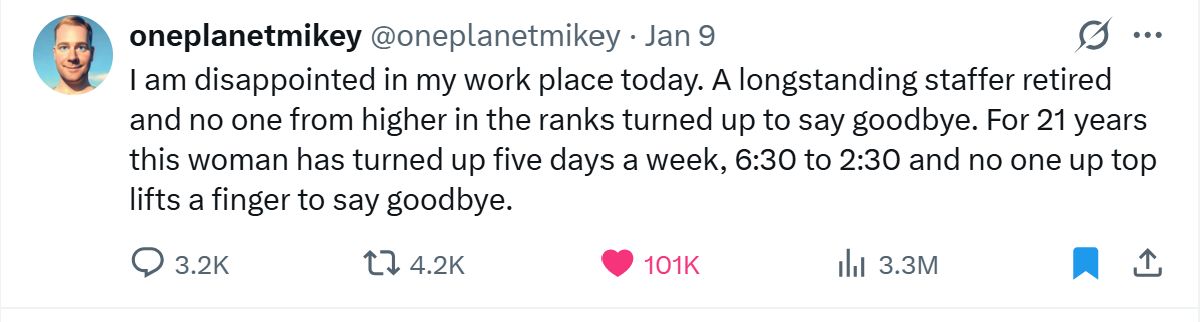
In a recent LinkedIn post, Suzanne Lucas discusses the significant impact that senior leadership’s absence from employee retirement events can have on company morale and culture. Lucas argues that while some executives might dismiss such occasions as unimportant, especially for a retiring employee they won’t see again, the message received by the rest of the staff is far more profound and damaging.
Lucas highlights the disconnect that occurs when those at the top fail to acknowledge long-term commitment. She posits:
“The message that the whole staff gets when execs are too busy to show up to such an event is that the staff is expendable.”
The Perceived Value of Employee Tenure
Suzanne Lucas emphasizes that skipping retirement celebrations sends a clear signal about how the company values its employees’ dedication. She suggests that in many cases, the retiring employee may have a longer tenure than the executives in the corner offices, making the absence even more glaring. According to Lucas, this oversight can foster a sense of disposability among the workforce.
“My bet, unless this was a family-owned company, is that this employee was there longer than anyone in the corner offices,” Lucas writes, underscoring the potential irony and insult of leadership’s absence.
Leadership’s Role in Recognizing Milestones
While acknowledging that larger companies might face logistical challenges with CEOs attending every retirement, Lucas maintains that a representative from senior leadership, particularly from the employee’s location, should be present. This gesture, she explains, is not merely about a party but about reinforcing the value placed on loyalty and long service.
Lucas questions the rationale behind neglecting such events, drawing a parallel to employee departures for new jobs. “Or am I off my rocker, and this is no different than someone who just quit? We don’t throw a party when you quit to go work a different job,” she ponders, suggesting that retirement represents a unique and significant career milestone deserving of formal recognition.
The Broader Cultural Implications
The core of Suzanne Lucas’s argument is that recognizing employee milestones, like retirement, is crucial for building a strong and loyal company culture. Failing to do so, she warns, can erode trust and make employees feel undervalued, potentially impacting retention and overall engagement.
In Lucas’s view, the decision of senior executives to attend or send a representative to retirement events is a critical indicator of the company’s true values. It’s a tangible way to communicate that long-term commitment is seen, appreciated, and respected within the organization.
📝 About This Content
This article is based on insights shared by Suzanne Lucas on LinkedIn.
📅 Originally posted on January 13, 2026 | View original post on LinkedIn →