
In the fast-paced world of business, the specter of disruption often looms large, driving organizations to constantly innovate and adapt. However, many companies don’t falter due to external shocks. Instead, they succumb to a more insidious threat: mediocrity. This quiet complacency can seep into the organizational fabric while teams are busy executing familiar, comfortable processes, often mistaking ‘what works’ for sustainable success.
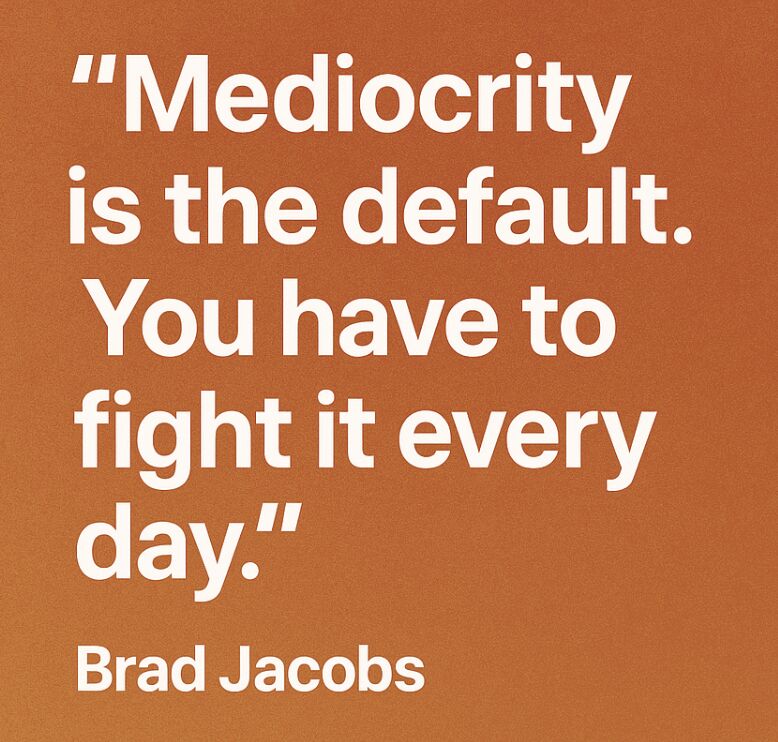
Jason Averbook, reflecting on a conversation between David Senra and Brad Jacobs, the founder of United Rentals, highlights this critical point. Jacobs’ stark assertion, “Mediocrity is the default. You have to fight it every day,” serves as a potent reminder. This isn’t about overt failure; it’s about the subtle comfort that arises from stagnation.
The Insidious Nature of Comfort
Mediocrity doesn’t announce itself with a bang. It arrives like a slow tide, gradually eroding the drive for excellence. When an organization becomes too comfortable with its current state, it risks losing its edge. This comfort can manifest in several ways:
- Resisting new ideas or technologies
- Prioritizing short-term gains over long-term strategic shifts
- Allowing processes to become outdated without critical review
- Discouraging constructive dissent or innovative thinking
The danger lies in the fact that these behaviors often appear rational and efficient in the short term. They are the path of least resistance, the ‘default’ that Jacobs refers to. However, this comfort is a fragile shield against the relentless pace of change that characterizes modern markets.
Cultivating a Culture of Vigilance
To build organizations that can truly thrive amidst constant evolution, a proactive stance against mediocrity is essential. This requires leaders and employees alike to cultivate a culture of vigilance and continuous improvement. Averbook suggests that the first step is to actively identify and name mediocrity when it appears, rather than letting it fester unnoticed.
Strategies for Combating Mediocrity:
Fostering a culture that actively fights mediocrity involves several key strategies:
- Encourage Calculated Risk-Taking: Create an environment where experimentation is valued, and failure is seen as a learning opportunity rather than a punishable offense.
- Promote Continuous Learning: Invest in employee development and ensure that teams are exposed to new ideas, methodologies, and technologies.
- Challenge the Status Quo: Regularly question existing processes and assumptions. Ask
📝 About This Content
This article is based on insights shared by Jason Averbook on LinkedIn.
📅 Originally posted on October 28, 2025 | View original post on LinkedIn →