
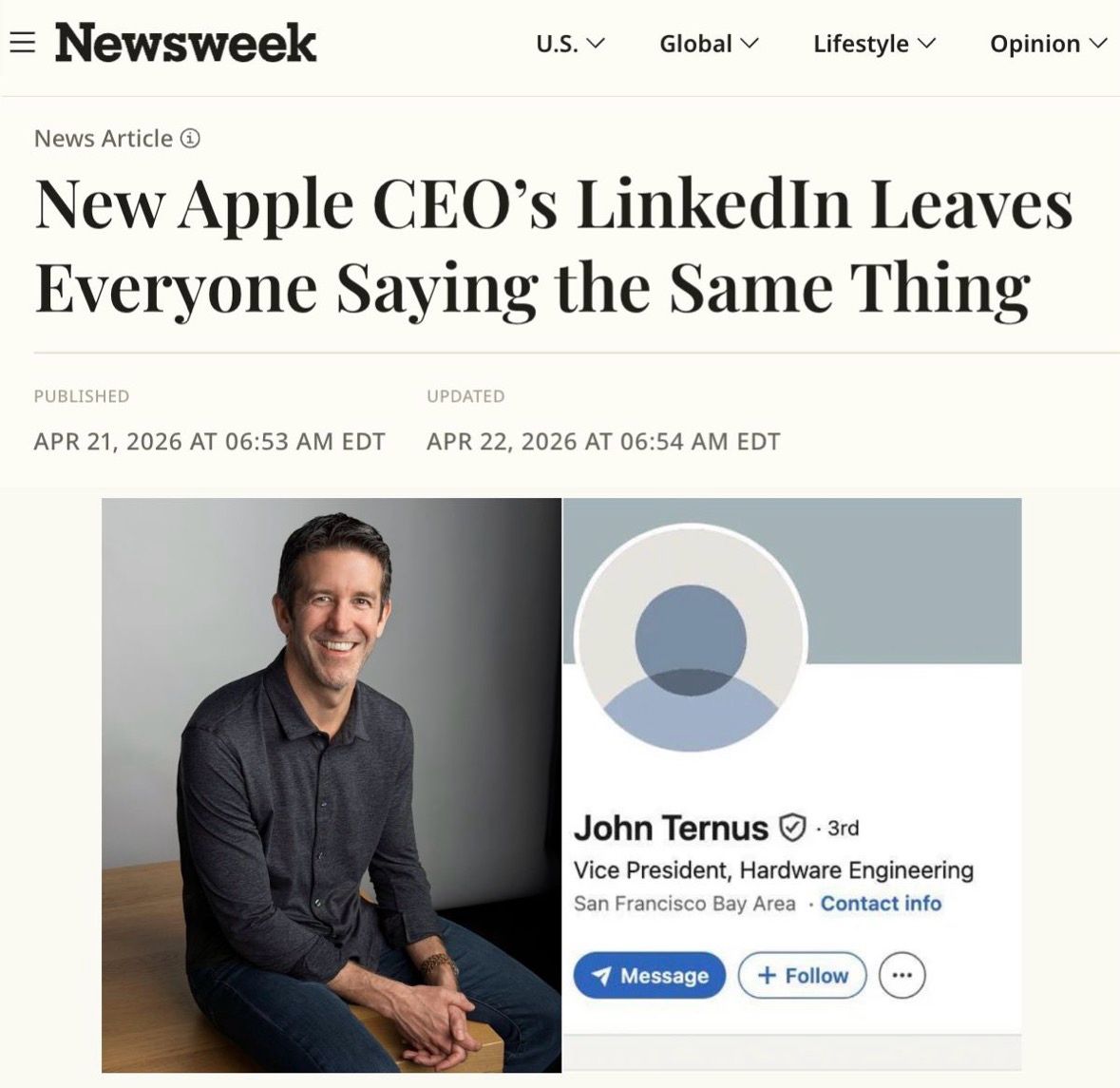
In a recent LinkedIn post, Justin Oberman offers a counterintuitive perspective on the perceived importance of active posting on the platform, particularly for high-profile business leaders. Oberman argues that the absence of a personal LinkedIn presence for figures like Apple CEO John Ternus is not an indictment of the platform itself, but rather a sophisticated strategic choice.
Oberman frames this approach as the ultimate goal of personal branding and publicity. He states:
“The goal. To be so important that your own posting could never compete with the impressions of other people posting about you.”
Oberman clarifies that this strategy is not about devaluing LinkedIn, but understanding its role within a broader ecosystem of influence. He points out that Microsoft, as the owner of LinkedIn, has no inherent need for an Apple executive to maintain a profile unless it serves a specific, perhaps even disruptive, marketing purpose, which he suggests is not on-brand for Apple.
The Power of Being Talked About
The core of Oberman’s argument rests on the principle that true influence often comes not from self-promotion, but from becoming a subject of conversation. He draws a parallel to a quote attributed to Benjamin Franklin:
“You can write things worth reading or you can do things worth writing about.”
According to Justin Oberman, Franklin’s adage emphasizes the significance of actions that naturally generate external discussion. In Oberman’s view, this is particularly relevant to social media strategy.
Mastering Personal Publicity Over Personal Branding
Oberman contends that for individuals aiming for significant online impact, mastering the art of personal publicity is more crucial than solely focusing on building a personal brand through direct posting. He elaborates on this distinction:
“Because if people are already talking about you, it’s going to be a lot easier to start posting successfully.”
In essence, Oberman suggests that when a leader is already generating buzz and being discussed by others on platforms like LinkedIn, their own potential future contributions to the platform will carry significantly more weight. The challenge, as Oberman sees it, is to orchestrate a level of public engagement and achievement that makes others the primary disseminators of one’s narrative.
Strategic Recommendations for High-Profile Figures
If Oberman were managing the personal brand of a figure like John Ternus, his strategy would pivot towards actions that naturally attract attention and discussion. He suggests that if such a leader were to have any presence on LinkedIn, it should be carefully managed.
Oberman recommends a limited engagement strategy for high-profile individuals:
- Focus on actions that generate external conversation and media interest.
- If a LinkedIn presence is maintained, restrict activity primarily to commenting on others’ posts.
- Consider alternative platforms like Substack for more direct content creation if active writing is desired.
Oberman’s analysis reframes the absence of a LinkedIn profile not as a lack of engagement, but as a deliberate and strategic positioning, highlighting that true influence can be built by becoming the news rather than just reporting it.
📝 About This Content
This article is based on insights shared by Justin Oberman on LinkedIn.
📅 Originally posted on April 29, 2026 | View original post on LinkedIn →